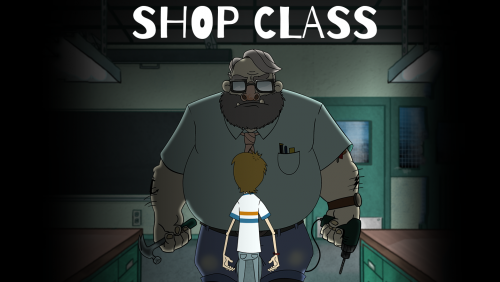
Head back to junior high with young Hart Snider as he finds himself lost amongst his peers, unable to ask out his dream girl, and forced to take shop with the dreaded Mr. P. A darkly funny look at growing up, through the filtered lens of a boy on the cusp of manhood.

A young Canadian woman visits the Vimy Memorial to make a charcoal imprint of the engraved name of her great-grandfather who was lost in battle, bringing with her a notebook of sketches and diary entries that he made during months of preparation for the battle to take back Vimy Ridge. The sketches transform into colourized archive footage and take us back in time to revisit the daily lives of the soldiers of the Canadian Corps, witnessing the long and detailed preparation that lead to this legendary battle.
Quebec, on the cusp of the 1960s. The province is on the brink of momentous change. Deftly selecting clips from nearly 200 films from the National Film Board of Canada archives, director Luc Bourdon reinterprets the historical record, offering us a new and distinctive perspective on the Quiet Revolution.
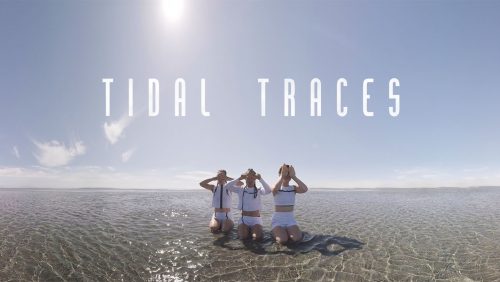
Tidal Traces is a 360-video VR dance piece that places viewers in the centre of the performance. In it, three characters explore a new and uncertain world—moving between tranquility and ominousness, beauty and peril. Entangled in this tension, the viewer becomes the fourth character, directly composing the dance through their gaze.
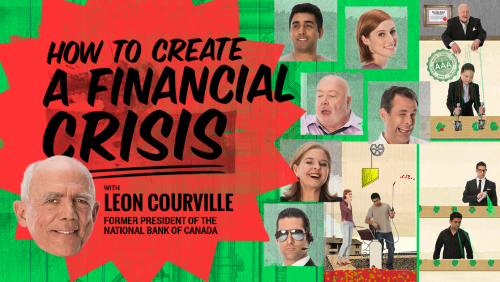
How to Create a Financial Crisis is a conversation via text messaging with Léon Courville, professor of economics and former President and Chief Operating Officer of National Bank of Canada, who invites users to create a financial crisis in order to understand its theoretical underpinnings and, more importantly, the human behaviour behind it. The experience is optimized for mobile phones and also accessible on tablets and computers. Each user engages in a 20- to 25-minute conversation with the professor, who unpacks five concepts that are vital to understanding the forces at work in the modern financial system. Through these exchanges, the user meets key players—including consumers, bankers, investors, politicians, and oligarchs—and explores the nature of imbalances within the compensation system, practices of debt securitization, flaws in financial regulations, the concentration of influential power (the “too big to fail” syndrome), and the usurpation of democratic systems by financial oligarchies.
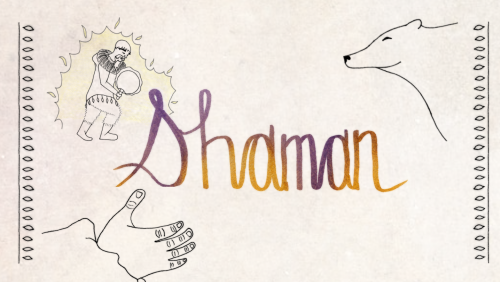
Shaman is a first collaboration between the National Film Board of Canada and Labrador Inuk artist—and first-time animator—Echo Henoche. The short brings to life Henoche’s favourite legend, told to her by her grandfather in her home community of Nain, Nunatsiavut, on Labrador’s North Coast. It is the story of a ferocious polar bear turned to stone by an Inuk shaman. Hand-drawn and painted by Henoche in a style all her own, Shaman shares with the world her perspective on this Labrador Inuit legend.
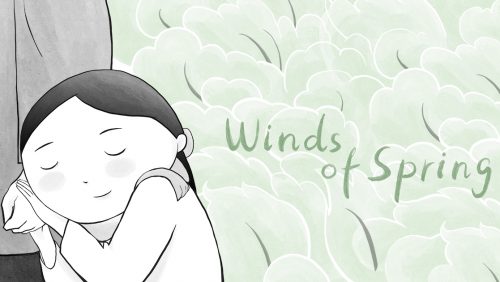
Stay or go? Keyu Chen examines this emotionally charged question in her first professional animated film, Winds of Spring, a delicately crafted work that unfolds with the rhythm of the seasons. Based on the filmmaker’s own personal experiences, this tenderly told story opens a window onto something universal. Driven by the irrepressible need for self-fulfillment, a young girl sets aside her family traditions and decides to leave the nest. In doing so, she begins an inexorable journey toward separation, with all of its magnificent and devastating implications for both her and her grandmother, who agrees to let her go. Keyu Chen employs her signature style of fluid transitions and fine, spare lines inspired by Chinese ink painting, in a film whose nuances of light and dark reflect the protagonist’s hopes and dreams on the dawn of her departure.