Indigenous Voices
Voix autochtones
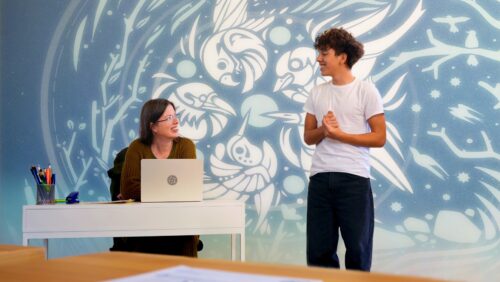
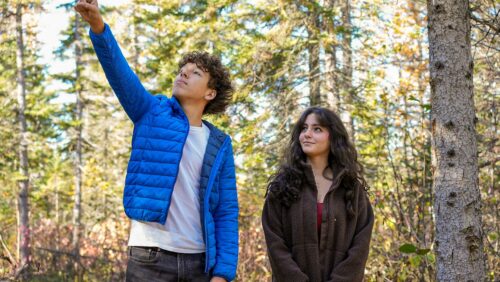
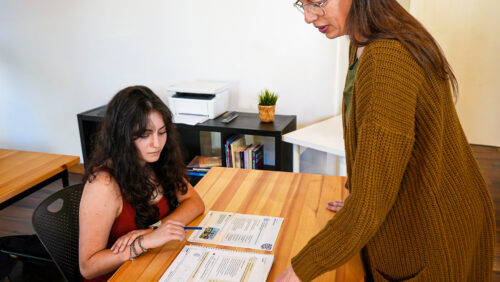
Produced by the National Film Board of Canada (NFB), Indigenous Voices is a classroom-ready resource that invites learners aged 12+ to engage with Indigenous stories, knowledge, and experiences through film, activities, reflection, and discussion. Developed alongside First Nations, Métis, and Inuit educators, Elders, Knowledge Keepers, creators, and youth, the resource aims to reflect the diversity of Indigenous cultures and perspectives across this land.
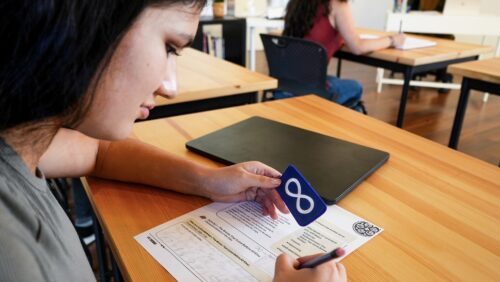
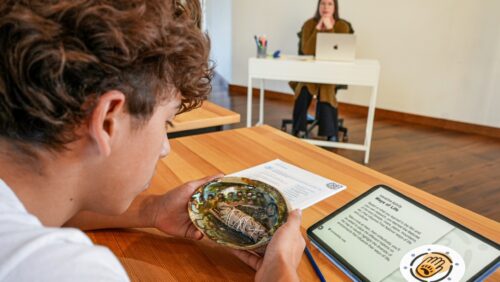
Featuring 13 Learning Pathways, each built around excerpts from the NFB’s extensive collection of Indigenous-made films and accompanied by Facilitator Guides and Student Workbooks, the free online platform offers rich opportunities to hear from Indigenous people, practise critical thinking, and take on the responsibilities that come with truth and reconciliation. Indigenous Voices allows students to listen, feel, reflect, and move into action together.
Promotional Video
Approaching certain content with care
Some topics addressed in the workshops may be complex and, at times, sensitive.
We strongly encourage educators to consult the support guides available on the platform. These resources provide guidance and practical strategies to support discussion, foster a respectful environment, and accompany learning.
Logline
Thirteen film-based Learning Pathways. One transformative journey. Hear Indigenous voices, expand your perspective, and deepen your understanding of our shared history and the path toward truth and reconciliation.
Detailed text
Produced by the National Film Board of Canada (NFB), Indigenous Voices is a free, classroom-ready learning resource that invites learners ages 12+ to engage with Indigenous stories, knowledge, and experiences through film, activities, reflection, and discussion. At a time when truth and reconciliation are important responsibilities for Canadians, the Indigenous Voices resource creates meaningful opportunities for young people to hear First Nations, Métis, and Inuit voices, to better understand Canada, and to see their role in an ongoing story of truth-telling and relationship-building.
Featuring 13 Learning Pathways—each with accompanying Facilitator Guides and Student Workbooks—Indigenous Voices encourages educators and learners to explore the social sciences, arts, health, literacy, and more, combining approaches from Western and Indigenous pedagogies.
The resource offers distinctive learning experiences that encourage critical thinking, reflection, and dialogue. Built around the NFB’s collection of Indigenous-made films and original multimedia content, the online resource gives young people the chance to encounter a diverse range of Indigenous films, stories, and perspectives from coast to coast to coast.
Created through Indigenous Leadership
Entrusted with the largest collection of Indigenous films made in Canada, the NFB has the responsibility of sharing these works with young generations. Through conversations with Indigenous educators, Elders, Knowledge Keepers, creators, consultants, and youth over several years, Indigenous Voices was conceived.
The goal was not simply to create an educational resource, but to honour Indigenous leadership, knowledge systems, and experiences throughout the process. The NFB worked collaboratively with numerous Indigenous contributors, including an Indigenous Advisory Circle composed of eight educators, listening, testing ideas, and revisiting decisions together. The work required openness, trust, and a willingness to engage with difficult histories and truths, ensuring that the resource reflects a more complete story of Canada.
Learning Pathways
Rather than presenting Indigenous histories and realities as a single subject or unit of study, the Learning Pathways in Indigenous Voices encourage learners to make connections across disciplines and perspectives. A pathway is a module combining accessible multimedia content about a specific perspective or topic. Each pathway is anchored by a guiding question and combines film excerpts, interactive activities, guided discussions, and sharing circles to support active learning.
The 13 Learning Pathways honour the 13 moons of the lunar calendar and cover:
- Land
- Languages
- Knowledges
- Peoples and Cultures
- Treaties and Agreements
- Laws and Policies
- Sovereignty, Relationships, and Identity
- Governance and Economics
- Resistance and Rights
- Worldviews
- Apologies and Acknowledgements
- Healing
- Youth
Indigenous Voices is designed for learning throughout the school year and beyond, and is complementary to curriculum across regions. There is no prescribed journey through the content. Educators, students, families, and communities can begin wherever they like, follow the pathways that resonate most, and learn at their own pace. Come as you are. Go as deep as you choose.
Grounded in curiosity, humility, and respect, Indigenous Voices invites learners not only to deepen their understanding of Indigenous histories and contemporary realities, but also to practise critical thinking, challenge their assumptions, and enter into the responsibilities that come with truth and reconciliation. By encouraging reflection and discussion, Indigenous Voices helps learners consider our shared responsibility and take action for our shared future.
FOREWORD By Nahanni Shingoose, Teacher, Consultant and Writer, Indigenous Voices
I really want to introduce Indigenous Voices in an authentic and personal way to you. Whether you are a parent, an educator, an administrator, a filmmaker, or other, we need you to know there are real people behind the making of this resource. Vetted Indigenous creatives, educators, and Knowledge Keepers, who draw from lived experiences and ancestral knowledge, have shared incredible amounts of emotional labour. They have shared their time, stories, knowledge, fears, laughter, and tears. Tears of grief, empathy, anger, and love. We are hungry for change. We honour those who have come before us, who have softened the grassy path with their moccasins, so we can continue our work, with the wellness and healing of the next seven generations of children in mind.
In reciprocity, we invite you to the table. Fair warning: know that it won’t be easy. Uncovering the truth and legacy of Canada’s dirty secret is gut wrenching. It’s not easy. It might take some extra work on your part. You might find yourself feeling uncomfortable. Know that it’s normal; in fact, we encourage your uncomfortableness. We urge you to unpack your own biases, privilege, and positionality. This is how change happens. The more comfortable you become with this resource over the years, the more your students will benefit, and the greater contribution you will have made toward reconciliation. Our vision for this resource includes the spirit of humanizing us as Indigenous Peoples, and the spirit of relationship building through the sharing of our stories.
In 2017, the National Film Board of Canada created a strategic plan to respond to the Truth and Reconciliation Commission of Canada and the 94 Calls to Action. You need to know that the powers that be at the NFB did not say to the Indigenous Advisory Circle and writers, “We have a resource in mind, and we want you (as Indigenous people) to write this for us, with our ideas, to meet our needs.” Instead, they listened and they held the space for us to work in an authentic way through an Indigenous pedagogical lens, and they said “yes” to the work we prepared. They didn’t question epistemologies, they didn’t devalue our work by omitting things they didn’t think were important, and they didn’t tolerate dehumanizing us in film or in print. They reflected; they worked hard at the relationship, and they trusted that we knew what we were doing. This is an example of reconciliation and de-colonizing the creative process.
This resource is not just about a dark and dreary past. Yes, we must tell the truth of genocide in its entirety before we can reconcile. Some are still learning the truth. This may take years. Though, please know that this resource is balanced with celebrations of Indigenous languages, arts, cultures, and love and care for the land. These things unite us; they don’t divide us.
So, my friends, this is where our learning journey begins! For almost a century, the National Film Board of Canada has been telling stories through film. It’s so exciting to know that the NFB now hosts the largest collection of Indigenous and Indigenous-made films in Canada, with over 50 of them from a director like no other, Alanis Obomsawin.
Finally, on behalf of the Education Team at the National Film Board who worked tirelessly on this resource, we would like to personally thank all of the contributors. Of course, we also want to thank and acknowledge each and every individual who is in this resource, living or passed, in addition to the traditional territories and lands of the Indigenous Peoples in present-day Canada, with whom we shared meals and stories, shot film, and held each other’s hands through the tears.
Miigwech, merci. We hope you love it.
Interview with Sophie Quevillon, Head of Education and Producer of the resource
Why was Indigenous Voices created, and why is it needed now? (“What does it mean to truly listen to Indigenous voices today?”)
At the NFB, we have a responsibility to preserve the films entrusted to us and to help them reach new generations. Indigenous Voices grew from that responsibility, and from a desire to create meaningful opportunities for young people to encounter Indigenous cinema, stories, and perspectives.
We brought educators, Elders, Knowledge Keepers, and youth into the development of a resource that would support those encounters in the classroom. The films open conversations; the activities give students time to reflect, ask questions, and connect what they discover to their own lives.
That feels especially important today. Reconciliation is an ongoing responsibility, and education is one place where we can help carry it forward.
For me, truly listening means giving these voices our attention and allowing what we hear to influence our understanding and our actions. That applies to us at the NFB, too.
Were there moments or conversations that changed the approach to the project, or even, the overall vision?
I can’t point to one defining conversation.
What changed was my understanding of my own responsibility.
Through the relationships built during this project, my commitment became deeply personal. I became more aware of my position as a white, non-Indigenous woman and a producer within a public institution, and of the responsibility that comes with that role in a context shaped by colonialism. That meant recognizing my influence over decisions, the limits of my own perspective, and my responsibility to the people trusting us with their contributions.
That changes how you work. You must be willing to question your assumptions and let what you hear change your decisions. For me, listening became a commitment to act on what I was learning—and that commitment will continue long after the launch.
What lessons do you hope other institutions take from the way Indigenous Voices was developed?
For me, this raises a bigger question: How do we make room for Indigenous perspectives within institutions whose ways of working were established without them?
We have to look at who defines the priorities, who makes the decisions, whose knowledge carries authority, and who is expected to adapt. If Indigenous contributors always have to fit our timelines, processes, and definitions of success, we haven’t changed very much.
I’m still learning what that means in practice. This project has made me more aware of the systems I work within and the assumptions I bring to them. I hope other institutions will make space for those same questions—and be willing to act on what they learn.
Some educators worry about “getting it wrong” or not knowing enough. Is there anything you’d like to say to a non-Indigenous teacher who wants to bring this into their classroom, but doesn’t feel confident in their capacity to share this with their students?
I understand that hesitation. It comes with a sense of responsibility. But you don’t have to know everything before you begin. You can prepare carefully and still say to your students, “I’m learning too.”
Indigenous Voices creates space for Indigenous people to share their own stories and perspectives. As a teacher, you can help students listen, ask thoughtful questions, and reflect on what they hear. You don’t have to speak on behalf of anyone.
Start with one film or one activity. Recognize whose knowledge you’re engaging with, and remember that no individual speaks for all Indigenous Peoples. Indigenous students should also be free to participate without being expected to explain or represent their communities.
Confidence grows through that practice. The important thing is to remain curious, be open to correction, and keep learning.
How do you hope learners, educators, families, and communities continue their journeys after they’ve completed Indigenous Voices?
I hope they leave with questions they want to pursue and stories they want to share. A film can stay with you for years. It can change a conversation at home, prompt you to learn about the territory where you live, or lead you to seek out another filmmaker’s work.
For educators, I hope Indigenous Voices becomes something they return to throughout the school year, as their own understanding and their students’ questions evolve. I also hope it encourages relationships with Indigenous educators and communities, approached with respect for their time, priorities, and willingness to participate.
At the NFB, preserving these films also carries a responsibility to help them reach new generations. Seeing young people engage with them, discuss them, and carry those conversations into their lives is what gives that work its continuing purpose.
Walkthrough Video
Images
Loading...
Download
Loading...
Download
Loading...
Download
Loading...
Download
Loading...
Download
Loading...
Download
Loading...
Download
Loading...
Download
Special Thanks
This educational resource is the result of a collective process guided by the Indigenous Advisory Circle from the very beginning.
Charlene Bearhead
Rita Gould
Sonia Gros-Louis
Denise Hendry
Lisa Howell
Uliut Iksiktaaryuk
Bobbie-Jo Leclair
Sabrina Sawyer
We warmly thank all those—and there are many—who contributed to this project by sharing their perspectives, experiences, and knowledge.
Credits
Original Vision and Concept
Charlene Bearhead
Rita Gould
Sonia Gros-Louis
Denise Hendry
Lisa Howell
Uliut Iksiktaaryuk
Bobbie-Jo Leclair
Sabrina Sawyer
Project-wide Contributions
Educational Resource
Production
Sophie Quevillon
Writing and Consultation
Benjamin Albrecht
Ujarak Appadoo
Charlene Bearhead
Jodie Callaghan
Crystal Clarke
Cheryl Devin
Tracey Doherty
Coralie Girard
Sonia Gros-Louis
Anika Guthrie
Lisa Howell
Bobbie-Jo Leclair
Eileen Marthienson
Sean Oliver
Sabrina Sawyer
Nahanni Shingoose
Earl Manny Skead
Becky Tootoo
Joël Tétrault
Educational Design
Coralie Girard
Laurence Lalonde
Marc-André Roy
Brian Sellors
Multimedia Team
Justine Blanchet
Michael Cerantola
Jean-François Côté
Matthew Dorey
Coralie Girard
Nada Jreidini
Laurence Lalonde
Laetitia Marchand
Patrice Rioux
Marc-André Roy
Jason Simard
Brian Sellors
Enrico Sinatra
Gabrielle Vézina
Project Coordination
Geneviève Sauvé
Technical Coordination
Jean-François Côté
English Editing
George Kaltsounakis
Graphic Design
Vincent Design
Archives (ED RESOURCES)
Host Videos — Project-wide Contributions
Production
Sophie Quevillon
Associate Producer and Video Capture
Christopher White
Sound Recording
Christopher White
Editing
Christopher White
Color Grading and Online Editing
Yannick Carrier
Luca Di Gioacchino
Serge Verrault
Sound Design and Editing
Daniel Toussaint
Mixing
Luc Léger
Graphic Design and Visual Effects
Mélanie Bouchard
Alain Ostiguy
Line Producer
Stéphanie Lazure
Technical Coordination
Jean-François Laprise
Luc Binette
Production Coordination
Evelyne Oquendo Cortes
Alexandra Levert
Merrill Matthews
Omorose Osagie
Geneviève Sauvé
Eponine Young
Music
Nagamo Publishing Inc
Illustrations
Daniella Autumn Smith
Archive Research and Clearance
Marika Lapointe
Closed Captioning
Diffuze
Mels
Host Videos — Special Contributions
Preserving Indigenous Languages
Host
Kijâtai Alexandra Veillet
Participants
Sigwanis Lachapelle
Myriam Thirnish
Alexandre Nequado
Camera
Elie-John Joseph
Sarah Salem
Hair and Make-up
Laurynn Miller
Production Assistant
Emily Gray
Respecting Indigenous Knowledges
Host
Ariane Desjardins
Camera
Elie-John Joseph
Sarah Salem
Hair and Make-up
Laurynn Miller
Production Assistant
Emily Gray
Archives
All Canada Photos
Charles Gimpel / Library and Archives Canada / Charles Gimpel fonds / e010952968-v8
Getty Images
iStock/boonkum
iStock/gorodenkoff
iStock/PeopleImages
iStock/SolStock
iStock/virtualphoto
Katherine Takpannie
Library and Archives Canada/National Film Board fonds/e011177468
Library of Congress Library of Congress, Prints & Photographs Division, Edward S. Curtis Collection
Pexels/Guillaume Falco
Pixbay
Rafael Visentainer/Pexels
Shivkumar91/Pexels
The Canadian Press
Celebrating Indigenous Peoples and Cultures
Hosts
Stéfanie O’Bomsawin Amélie Tétrault Océane Kitura Bohémier-Tootoo
Camera
Elie-John Joseph
Sarah Salem
Hair and Make-up
Laurynn Miller
Production Assistant
Emily Gray
Archives
Alamy
The Canadian Press
Getty Images
iStock/Ken Duffney
Katherine Takpannie – Takpannie Photography
Lachlan T. Burwash / Department of Indian Affairs and Northern Development fonds / Library and Archives Canada
Library and Archives Canada
Library of Congress
McCord Stewart Museum
National Film Board of Canada
Olaus J. Murie / Library and Archives Canada
Pond5
Provincial Archives of Alberta, B7256
University of Calgary Digital Collections
Understanding Treaties and Agreements
Host
Véronik Picard
Associate Producer
Xavier Watso
Camera
Brad Gros-Louis
Marc-Antoine Chantal
Hair and Make-up
Larissa Mycan
Production Assistant
Jaylin Rice-Douglass
Archives
Alamy
Archives of Ontario Bibliothèque et Archives Canada
Bibliothèque et Archives Canada, no d’acc 1977-35-2
Chateau de Versailles
Colin Boyd Shafer
Credits
David Rumsey Map Collection, David Rumsey Map Center, Stanford Libraries
Electric Studio / Library and Archives Canada
Galerie d’art d’Australie du Sud
Getty Images
iStock/kosmozoo
L’Atlas curieux – Nicholas de Fer
Library and Archives Canada
Library and Archives Canada, Acc. No. 1972-26-1457
Library and Archives Canada, Acc. No. 1990-497-2
Library of Congress, Geography and Map Division
Museo del Prado
New York Public Library
Nisga’a Lisims Government
Northern BC Archives & Special collections
Nova Scotia Archives
Pixabay
Polina Tankilevitch
The Canadian Press
The Christina N. and Swan J. Turnblad Memorial Fund
The Western Call
The University of British Columbia
University of Calgary Digital Collections
Investigating the Impact of the Canadian Government’s Laws and Policies on the Lives of Indigenous Peoples
Host
Samuel Rainville
Associate Producer
Xavier Watso
Camera
Brad Gros-Louis
Marc-Antoine Chantal
Hair and Make-up
Larissa Mycan
Production Assistant
Jaylin Rice-Douglass
Archives
Alamy
Antiquarian Images/Mary Evans
Bibliothèque et Archives Canada
Bibliothèque et Archives Canada / PA-017946
Bibliothèque et Archives Canada/Fonds du ministère de la Santé incluant l’ancien Fonds du ministère de la Santé nationale et du Bien-être social
Bibliothèque et Archives Canada/Fonds du ministère des Affaires indiennes et du Nord canadien Bud Glunz / National Film Board of Canada. Photothèque / PA-134110
Canada. Dept. Indian and Northern Affairs / Library and Archives Canada / e011078104_s2
Canada. Dept. Indian and Northern Affairs / Library and Archives Canada / e011080274
Ed Maruyama
Gar Lunney / National Film Board of Canada. Photothèque / Library and Archives Canada / PA-191424
Getty Images
Indigenous and Northen Affairs Canada
iStock / TBC
Library and Archives Canada, Acc. No. 1984-45-269
Library and Archives Canada/National Film Board fonds/e011177468
Library of Congress O.B. Buell / Library and Archives Canada
Project Gutenberg
TVO
Exploring Sovereignty, Relations and Identities
Host
Jemmy Echaquan-Dubé
Camera
Andrew Koller
Sam Reid
Hair and Make-up
Deonna Fetzko
Assistant Camera
Tom Bonham
Production Assistant
Malaina Schreiber
Archives
Alamy
Canadian Press Images
CP Images
Electric Studio / Library and Archives Canada
Library of Congress
O.B. Buell / Library and Archives Canada
Provincial Archives of Alberta, B7256’ or ‘Archives provinciales de l’Alberta, B7256
Distinguishing Forms of Indigenous Governance and Economies
Host
Mélanie Napartuk
Associate Producer
Xavier Watso
Camera
Brad Gros-Louis
Marc-Antoine Chantal
Hair and Make-up
Larissa Mycan
Production Assistant
Jaylin Rice-Douglass
Archives
BC Archives
Bureau of Catholic Indian Missions Collections, Marquette University – ID 10812
Canada. Dept. of Transport / Library and Archives Canada
Charles Gimpel / Bibliothèque et Archives Canada
Electric Studio / Library and Archives Canada
iStock/TBC
Library and Archives Canada
Library of Congress
Manitoba Government Archives Manitoba Historical Maps
National Film Board of Canada / Library and Archives Canada
O.B. Buell / Library and Archives Canada / PA-118775
Pixabay
Pond5
The Lethbridge Daily Herald
University of Calgary Digital Collections
Appreciating Resistance Movements and Indigenous Rights
Host
Xavier Watso
Camera
Andrew Koller
Sam Reid
Hair and Make-up
Deonna Fetzko
Assistant Camera
Tom Bonham
Production Assistant
Malaina Schreiber
Archives
Archives La Presse
BC Archives
Bibliothèque et Archives Canada
Duncan Cameron / Library and Archives Canada
Frank Royal/Canada. Dept. of National Defense/Library and Archives Canada
George Mully/Estate of George Mully
Getty Images
Le ministère de la Défense nationale/Bibliothèque et Archives Canada
Library and Archives Canada
Library and Archives Canada / PA-012854
Morris Library – Southern Illinois University
Nick Nickels / Library and Archives Canada / Department of Indian Affairs and Northern Development fonds
Robert Cooper / Library and Archives Canada
The Canadian Press
Worsley Studio / Library and Archives Canada / Department of Indian Affairs and Northern Development fonds / e011307918
Acknowledging Worldviews
Host
Brad Gros-Louis
Associate Producer
Xavier Watso
Camera
Elie-John Joseph
Marc-Antoine Chantal
Hair and Make-up
Larissa Mycan
Production Assistant
Jaylin Rice-Douglass
Archives
Alamy Amit – Pexels
Archives nationales à Québec
Art Gallery of South Australia – South Australian Government Grant 1924
Bibliothèque et Archives Canada, no d’acc 1946-114-1 Don de Mme. J.B. Jardine
Bibliothèque et Archives Canada, no d’acc 1972-26-604
iStock/whitemay
Ivy Close Images/Alamy/All Canada Photos
Lachlan T. Burwash / Department of Indian Affairs and Northern Development fonds / Library and Archives Canada
Metropolitain Museum of Art
Musée McCord Stewart
National Archives and Records Administration
New York Public Library
Peaceful Ambiences – Pexels
Pearson Scott Foresman
Pixabay – Pexels
Pond5
Richard Harrington / Library and Archives Canada
Ricky Esquivel – Pexels
Roy Tash / Library and Archives Canada
The Canadian Press
Wikimedia
Wikimedia Commons
Examining Apologies and Acknowledgements
Host
Amélie Tétrault
Camera
Elie-John Joseph
Sarah Salem
Hair and Make-up
Laurynn Miller
Production Assistant
Emily Gray
Archives
Bibliothèque et archvies Canada/Library and Archives Canada
Canadian Medical Association Journal
Charles A. Keefer fonds / Library and Archives Canada
Dave Johnson / Winnipeg Free Press / Share with permission
Getty Images Government of Manitoba
Le Nouvelliste / BAnQ
Library and Archives Canada
Musée McCord Stewart – Mrs. R. Mack
Pixabay
Radio-Canada
The Canadian Press
The Waterloo Region Record
Truth and Reconciliation Commission of Canada
Western University Archives and Special Collections
Discovering the Importance of Healing
Host
Océane Kitura Bohémier-Tootoo
Camera
Elie-John Joseph
Sarah Salem
Hair and Make-up
Laurynn Miller
Production Assistant
Emily Gray
Archives
Bibliothèque et Archives Canada / C-001855
Bud Glunz / National Film Board of Canada. Photothèque / PA-134110
Canada. Dept. of Mines and Technical Surveys / Library and Archives Canada / PA-020345
CBC Archive Sales
Getty Images
McCord Stewart Museum
National Film Board of Canada
The Canadian Press
Meeting Indigenous Youth
Host
Jay Launière-Mathias
Associate Producer
Xavier Watso
Camera
Brad Gros-Louis
Marc-Antoine Chantal
Hair and Make-up
Larissa Mycan
Production Assistant
Jaylin Rice-Douglass
Archives
Getty Images
Glenbow Library and Archives Collection, Libraries and Cultural Resources Digital Collections, University of Calgary
Katherine Takpannie
Michael Wheatley / Alamy
The Canadian Press/La Presse Canadienne
Additional contributions
Legal
Dominique Aubry
Saskia Latendresse
Julie Patry
Christian Pitchen
Marketing
Shanice Tadeo
Sophie Thouin
Audience Engagement
Ross Johnstone
Nathalie Larivière
Esther Maloney-Lebensold
Administration
Brenda Hurdle
Digital Platforms and Products Team
Ana Appleyard
Mathieu Avoine
Jean-Sébastien Beaulieu
Camille Boissel
Jean-François Côté
Marc-André Daigneault
Rodrigo Gondim
Gwenaëlle Jouan
Jérome Lefeuvre
Mohammed Louir
Jee Hae Moon
Catherine Perreault
Innovation Team
Nassim Bouchemella
Guillaume Charron
Louis-Richard Tremblay
Information Management Team
Hélène-Marie Hegyes
Katherine Kasirer
Management Team NFB Education Head
Ross Johnstone
Estelle Lagueux
Sophie Quevillon
NFB Education Management
Hélène Fournier
Jacques Gautreau
Anne-Claire Lefaivre
François Sansregret
Melissa Wheeler
Executive Management
Jérôme Dufour (Distribution, communication and marketing)
Anne-Claire Lefaivre (Production, communications, distribution and marketing)
Media Relations
-
About the NFB
For more than 80 years, the NFB has been an essential and trusted resource for educators in Canada. It has developed longstanding relationships with Canadian teachers and others in the field of education. The NFB is developing online, media-based and interactive thematic learning programs founded on productions that foster deep learning, creativity and student action. The NFB’s new education offer is a learning destination designed to cultivate engagement and inspire creativity through and around storytelling innovation and media arts.